Marine molluscs
Antranig Basman, Karin Fletcher, Charles J. Gibbs, Donna M. Gibbs, Rick M. Harbo, Andy Lamb, Andrew Simon
August 7th, 2023
Galiano Island’s marine mollusc diversity
‘Mollusca’ is rooted in the Modern Latin ‘mollusca’, the neuter plural form of ‘molluscus’, from ‘mollis’, meaning “soft”.
With about 49,000 extant species, Mollusca are the second largest phylum after Arthropoda. The phylum comprises seven extant classes, five of which are locally represented around Galiano Island, including bivalves, cephalopods, gastropods, chitons, and tusk shells. Over 780 marine mollusc species have been identified in British Columbia. Of these, 225 species have been reported for Galiano Island over the last century and a half, through the combined efforts of more than 18 individuals.
The cold, rich waters surrounding Galiano Island are home to many remarkable molluscs, including the giant Pacific octopus (Enteroctopus dofleini), the largest octopus in the world. The largest chiton in the world, the gumboot chiton (Cryptochiton stelleri), is also known to the region and is reported for Galiano Island. Introduced bivalves present around Galiano Island include Pacific oyster (Magallana gigas), soft-shelled clam (Mya arenaria), purple mahogany clam (Nuttallia obscurata), and Japanese littleneck (Ruditapes philippinarum), all of which are now prolific in the Northeast Pacific. Introduced gastropods present include Japanese false cerith (Batillaria attramentaria) and the mouse-eared snail (Myosotella myosotis).
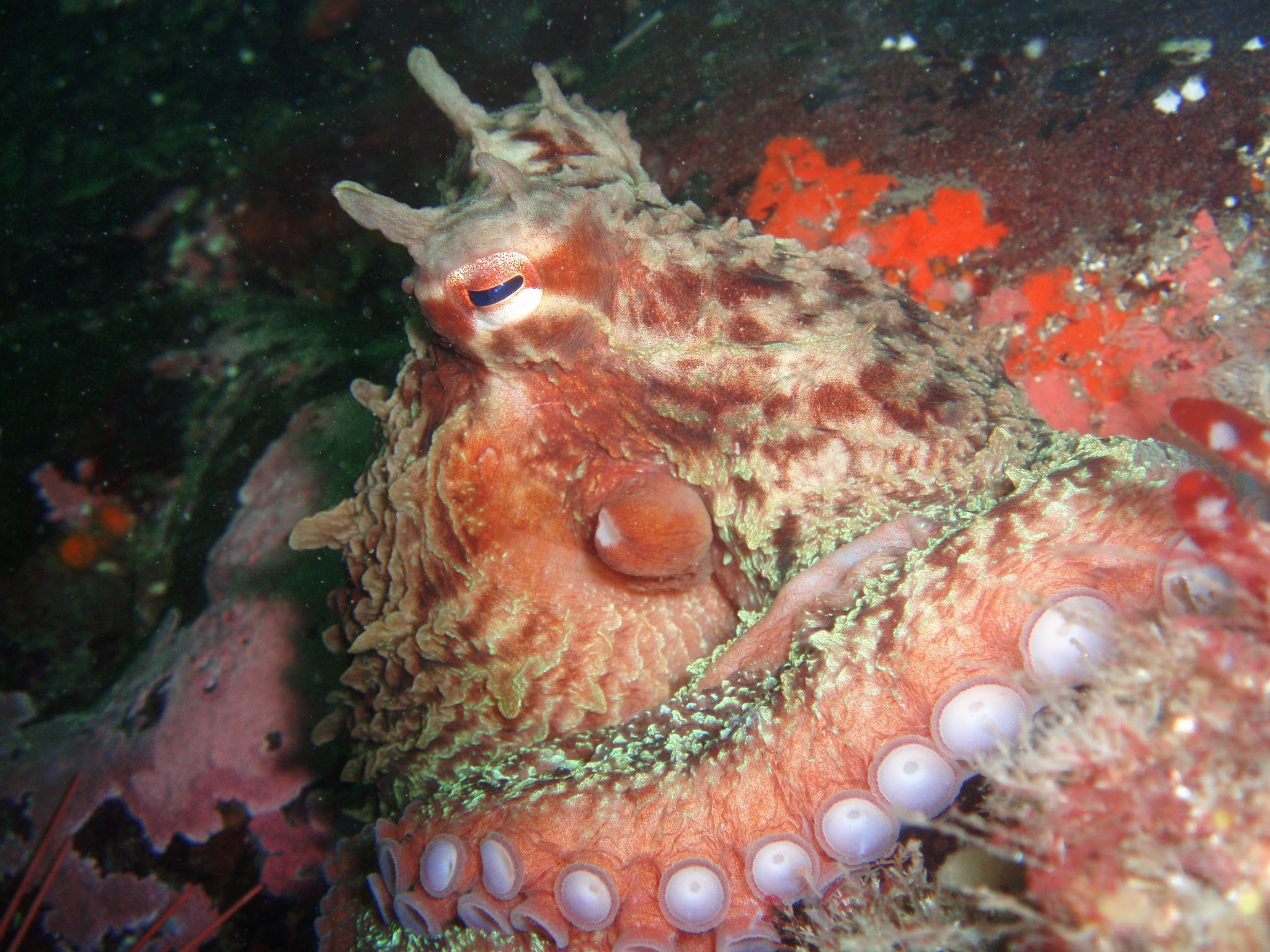
Giant Pacific octopus (Enteroctopus dofleini) – Photograph by Peter Luckham
Community science contributions
Since the Biodiversity Galiano project began in 2016, our community has documented 132 mollusc species in the waters around Galiano Island, confirming 47 percent of the historical records and adding 51 new species to the list. Of the 174 historically reported taxa, 92 species remain unconfirmed, having gone unreported in the last twenty years.
Mollusc inventories have historically been limited by outdated taxonomy and other challenges, leaving much hidden diversity that remains to be discovered in the region. As with other groups, European species concepts have historically been misapplied to Northeast Pacific taxa among Mollusca. One example is the aeolid nudibranch Cuthona pustulata, originally described from the Northeast Atlantic in 1854. Specimens collected under this name from Porlier Pass off Galiano Island by Sandra Millen in 1982 (RBCM 983-00026-001) have since been described as Zelentia nepunicea, based on genetic sequencing results. Other novel nudibranch species have also been circumscribed in part based on specimens collected from local waters. One species complex, which was reported as Cadlina luteomarginata for over 50 years, has since been split into four different species, including C. klasmalmbergi, first collected from Baines Bay on Galiano Island.
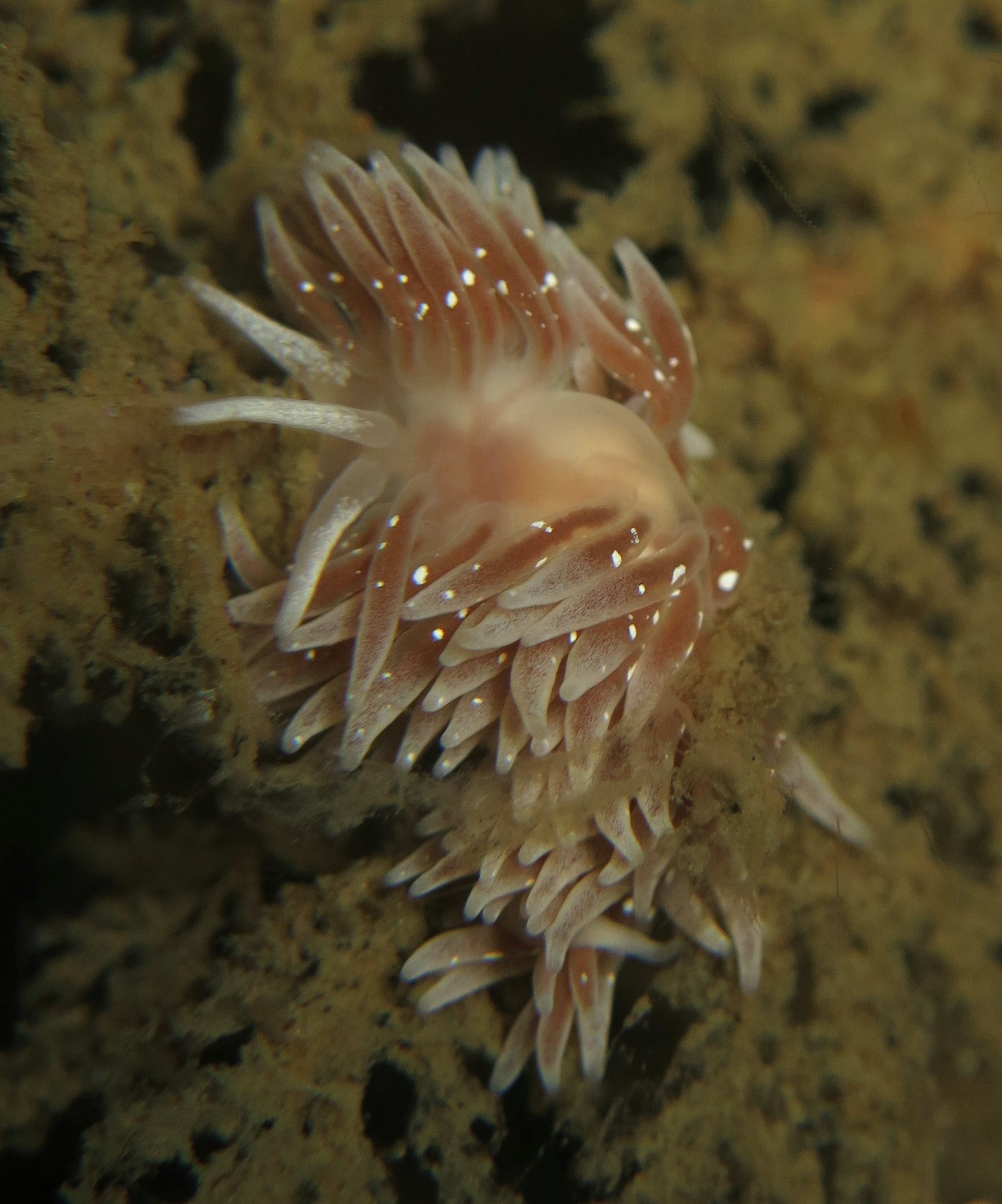
Pimpled aeolid (Zelentia nepunicea) – Photograph by Karin Fletcher
Molluscs with Indigenous cultural significance
Molluscs are one of many phyla that have cultural significance to Hul’qumi’num speaking peoples.
Bivalves: Generally, bivalves across species are regarded as delicacies, important materials for regalia, and high value trade items. Specific species of bivalves that have important cultural significance include:
Basket Cockle, known in Hul’qumi’num as Stl’ula’um, is a favourite food for many and has been dried over fire or above woodstone for consumption. The siphon of stl’ula’um has been used as a pacifier or soother.
Butter Clam, known in Hul’qumi’num as S-axwa’, are a highly valuable trade item, with fresh s-axwa’ having been traded to the Interior historically. S-axwa’ are extremely valuable to communities that are not close to the ocean, in addition, S-ts’eyhw s-axwa’ (dried butter clams) are an important food source during the winter.
Geoduck Clam, known in Hul’qumi’num as Pun’eq’, is harvested during the lowest tide cycles, which typically occur in January. In fact, the word for January means harvest of pun’eq’.
Littleneck Clam, known in Hul’qumi’num as Skw’lhey, is popularly steamed, with the juice from this process used as a preventative medicine.
Giant Pacific Scallop, known in Hul’qumi’num as Kwuneem’mun’, has high value for cultural use and is difficult to collect. The shell was used for regalia and the meat eaten as a delicacy.
Northern Abalone, known in Hul’qumi’num as S-eyo’, is currently threatened as a result of overharvesting and the harvesting S-eyo’ has been outlawed. Historically, S-eyo’ was used for trade in addition to crafting jewelry from different parts of the shell pattern.
Pacific Oyster, known in Hul’qumi’num as Tl’uxwtl’uxw, Tl’uxw means “hard” in Hul’qumi’num, with Tl’uxwtl’uxw translating as “hard hard”. This name is for the Olympia oyster but is also now used to refer to the introduced Pacific oyster as well. Tl’uxwtl’uxw can be consumed, raw, steamed, or roasted and then dried.
Cephalopods: Generally, cephalopods are also regarded and deliciacies and have unique and traditional ways of harvesting
- Giant pacific octopus, known in Hul’qumi’num as Sqi’mukw, is featured in many cultural stories and is consumed as a delicacy, often smaller sized rather than larger sized sqi’mukw. Sqi’mukw is traditionally and commonly caught using a gaff.
Polyplacophora: Generall, polyplacophora are a difficult group to consume but are highly regarded for community members and important for cultural teachings
Black Katy Chiton, known in Hul’qumi’num as Xulum’, is a scare delicacy that has been difficult to find since the 1940s and 1950s. An important delicacy that community members have travelled great distances in order to bring Xulum’ to Elders unable to travel.
Gumboot Chiton, known in Hul’qumi’num as ‘Ukws’, have specific cultural teaching about when in their life cycle they are safe to eat. Instructions for preparing ‘Ukws’ are important to follow as, if they’re cooked improperly, they will be difficult to consume.
Top community contributions to our knowledge of the island mollusc diversity
Here, you can browse photos of mollusc species commonly documented around Galiano Island, as well as recent observations, most favourited observations, and top observers, based on iNaturalist data. Please help contribute to the growing record of the island mollusc diversity by submitting your observations to the Biodiversity Galiano iNaturalist project.