
Calypogeia neogaea
| Common Name | None |
| Quick & Dirty ID | XXXXXX |
Image Gallery


Distinguishing Features
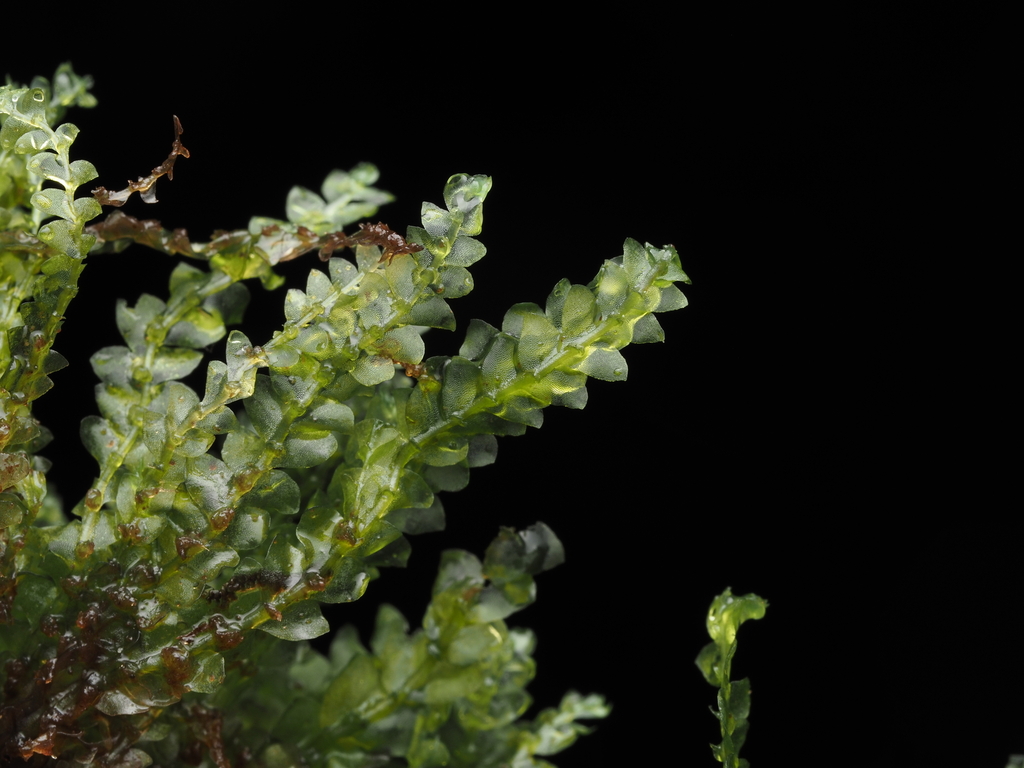
An infrequent species of wet, peaty banks, the light green and relatively large Calypogeia fissa forms long shoots (> 2cm) that loosely weave through other bryophytes. The leaves are somewhat distant and have a rounded-triangular shape and apices that are often notched. The underleaves are diagnostic as they are deeply divided to within a few cells of the base.
Similar species
The leaves of C. fissa might be mistaken for Bazzania on account of the notches at their tip, underleaves in the former are always two-lobed and deeply divided, whilst species of Bazzania have underleaves that are typically 3-4 lobes and shallowly divided. No other species in the genus Calypogeia has such a deeply divided underleaf and as such C. fissa is unmistakeable upon inspection with a hand lens.
Habitat
Moist to mesic humus, decayed wood, peatlands, swamps, bogs, and streambanks in the lowland and montane zones; locally frequent in coastal BC, rare in southeastern BC.
Associated species
XXXXXX
Distribution Map
Relevant Literature
- Godfrey, J.D. (1977). Hepaticae and Anthocerotae of southwestern British Columbia . [Doctoral dissertation, University of British Columbia]. UBC cIRcle.
- Hong, W. S. (2007). Scapania. In Flora of North America Editorial Committee (Eds.), Flora of North America North of Mexico (Vol. 3) . Oxford University Press.
- Wagner, D. H. (2013). Guide to the liverworts of Oregon: Scapania undulata . Oregon State University Herbarium.