
Marsupella stableri
| Common Name | None |
| Quick & Dirty ID | XXXXXX |
Image Gallery
Distinguishing Features
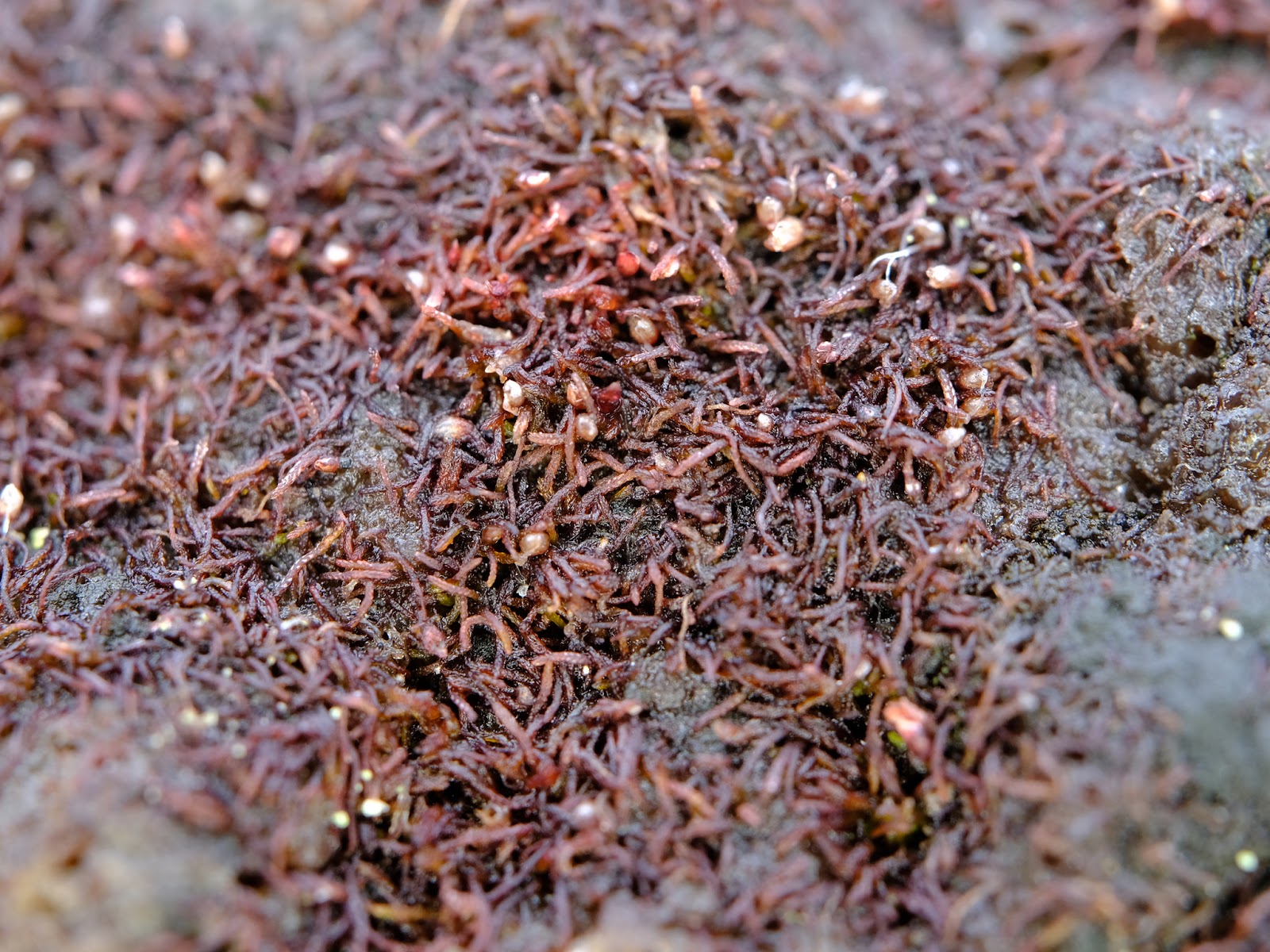
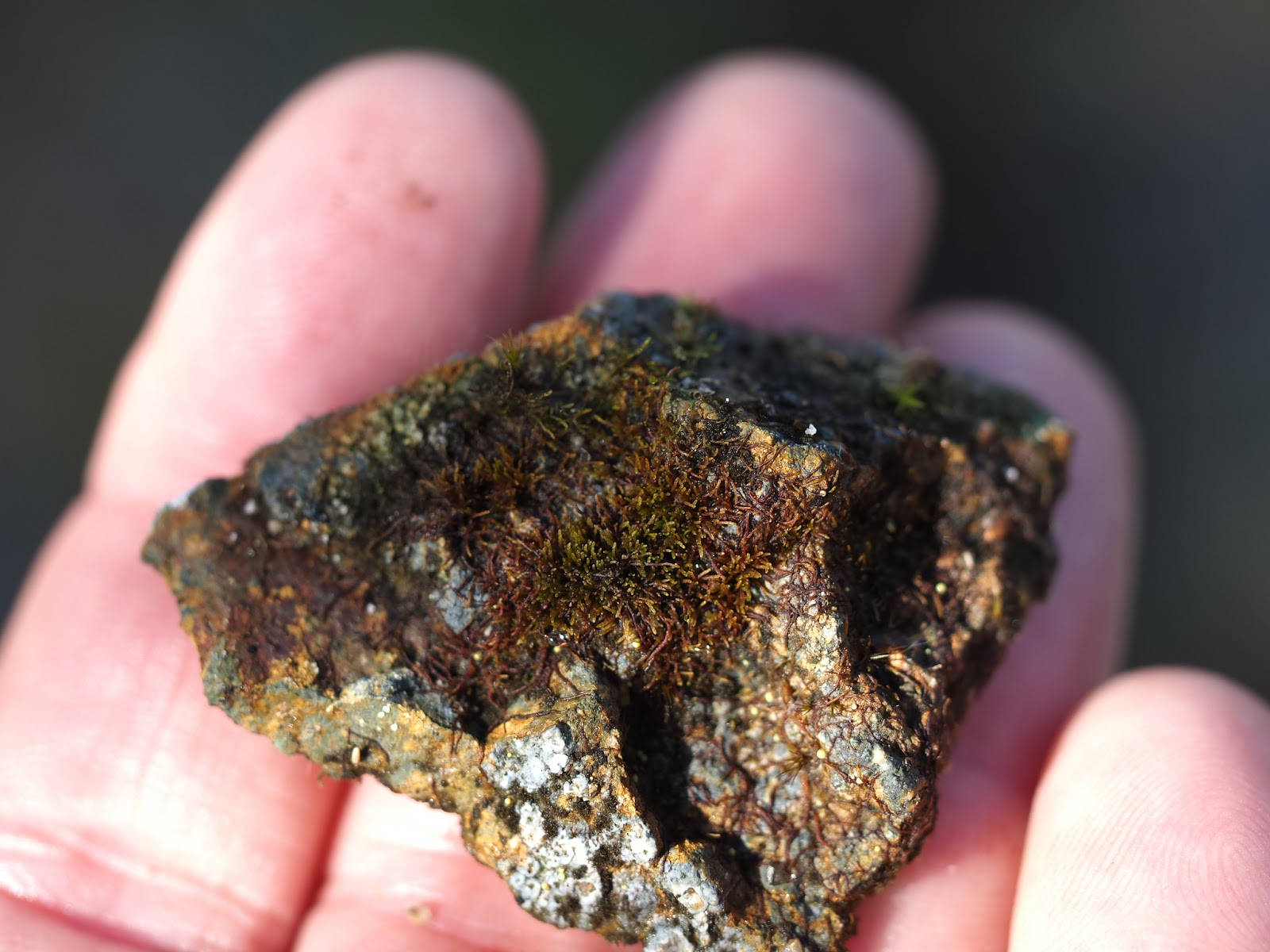
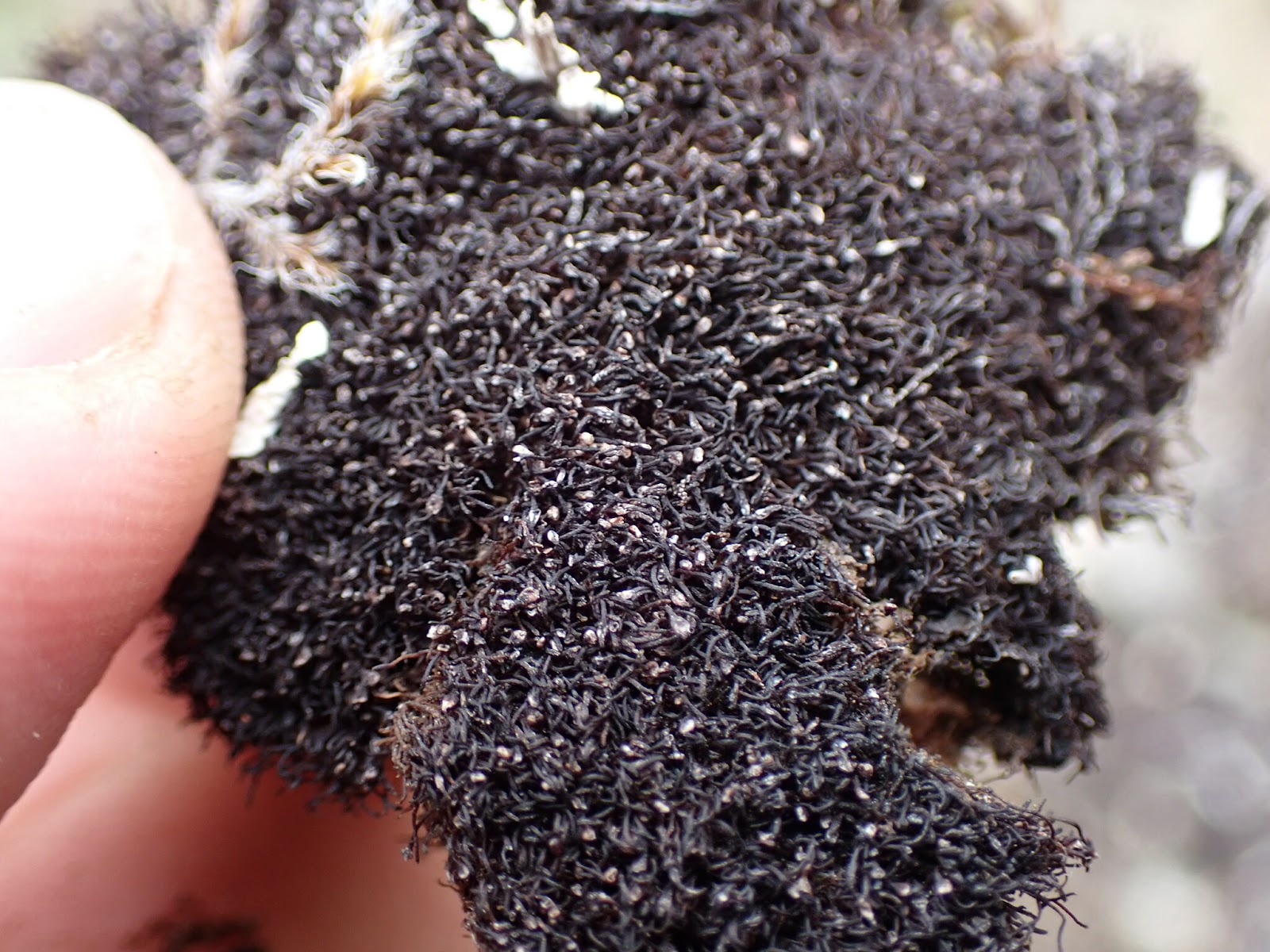
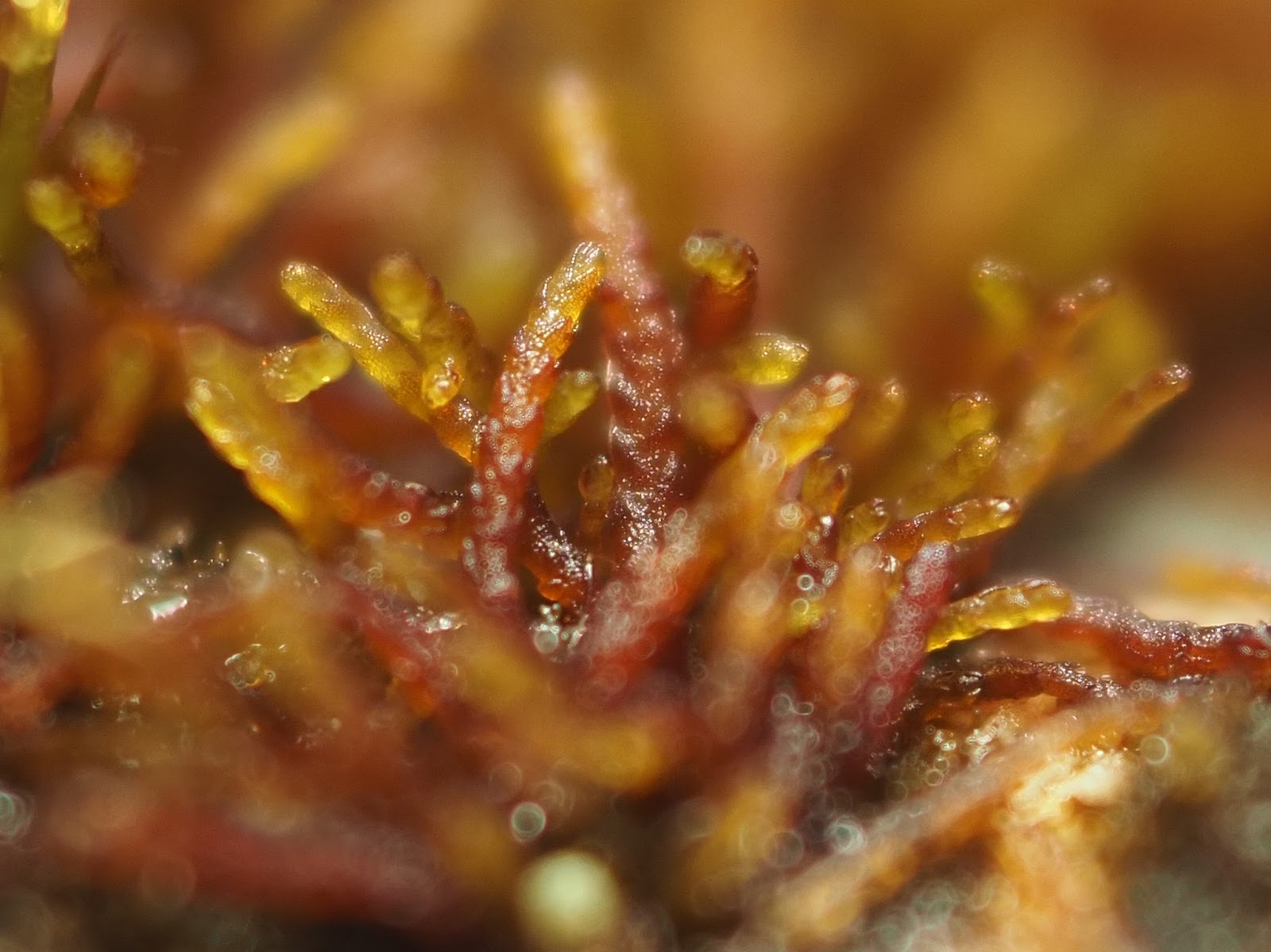
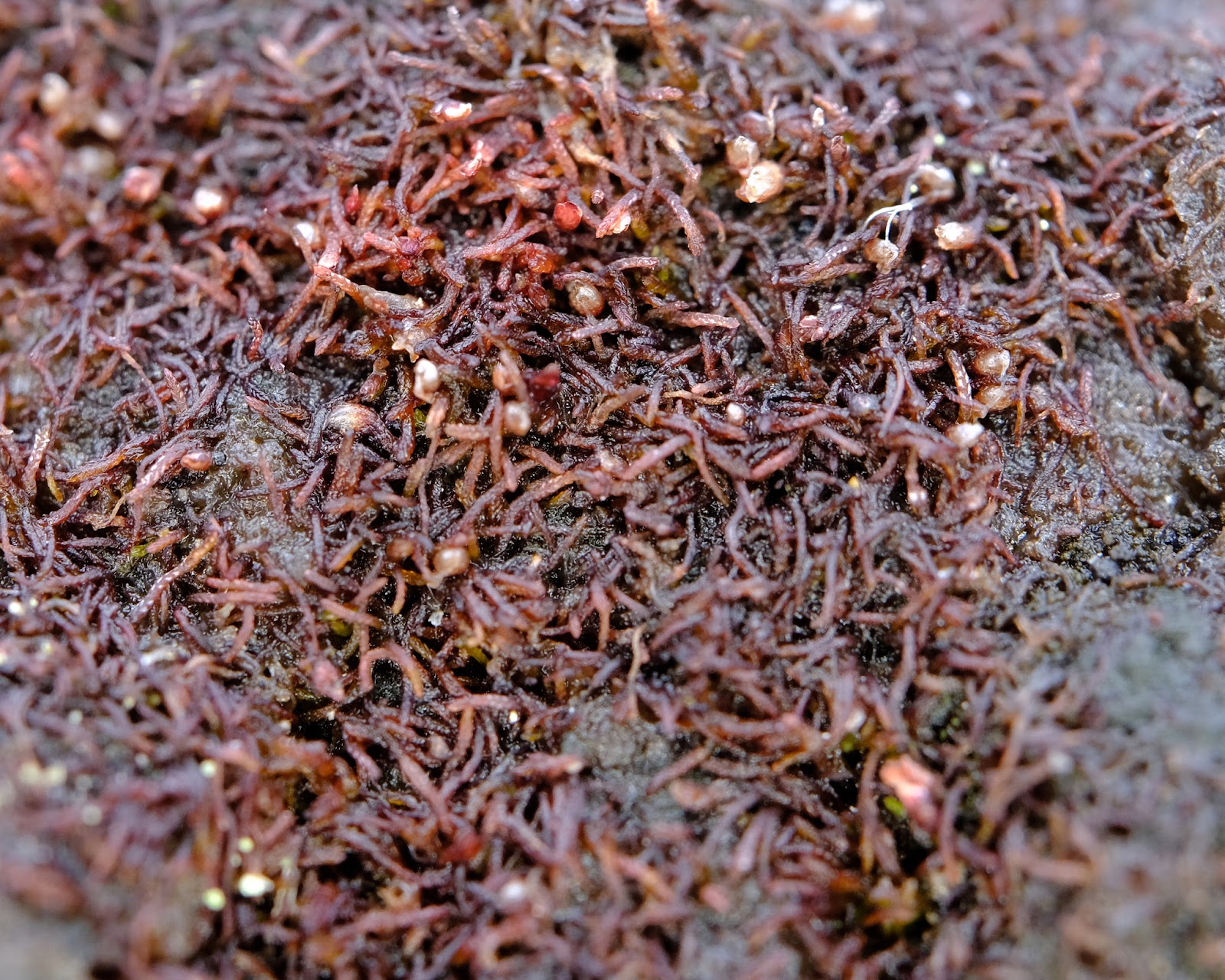
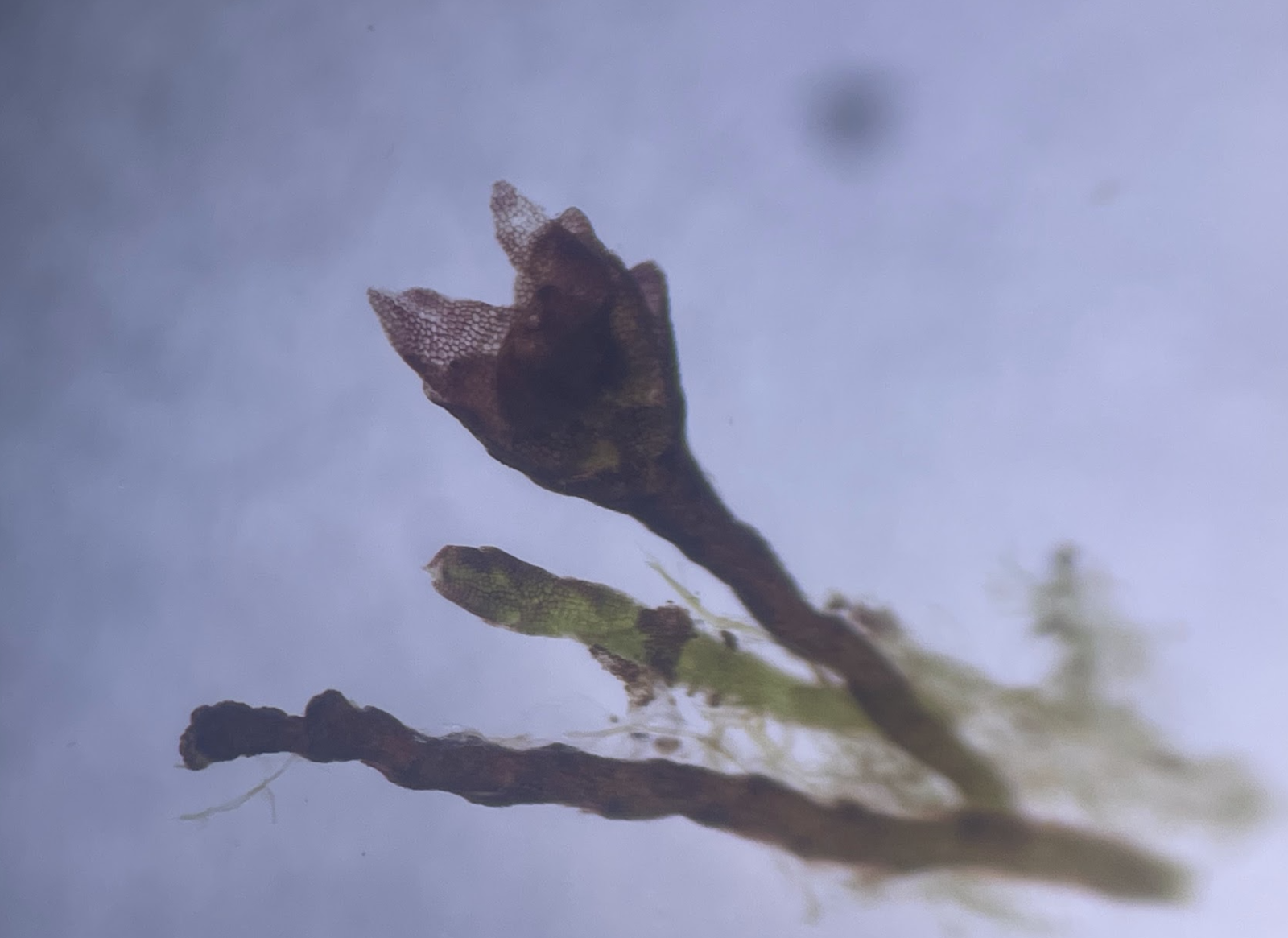
Forming dark red-purple mats of tiny (<.25 mm wide by about 5 mm long) compressed stems on mineral soils along shallow drainage, M. stableri is easy to overlook. When wet, it is amorphous, but a quick squeeze and hand lens inspection reveals the tiny bilobed leaves that are tightly appressed to the stem. The stems have a flattened look to them, their shape often visible between the leaves
Similar species
Gymnomitrion apiculata is similar in shape and size to M.stableri, but it has more closely overlapping leaves, whereas the leaves of M. stableri have a smaller overlap zone and consequently do not appear as wormy. Marsupella brevissima is found in late snow-bed habitats, typically at higher elevations and has leaves that are clearly free from the stem in the wet state. M. condensata, which can also have wormy shoots, is lighter in colour, has stems that lack the compressed character of M. stableri, and has leaves with moon-shaped (“lunulate”) sinuses. This microscopic character contrasts with the acute or sharply angled sinus base of M. stableri.
Habitat
Moist to wet humus, mineral soil, rock outcrops, cliffs, ledges, crevices, and boulders in the lowland, montane, subalpine, and alpine zones
Associated species
Campylopus atrovirens, Campylopus fragilis, Anthelia sp.
Distribution Map
Relevant Literature
- Godfrey, J.D. (1977). Hepaticae and Anthocerotae of southwestern British Columbia . [Doctoral dissertation, University of British Columbia]. UBC cIRcle.
- Hong, W. S. (2007). Scapania. In Flora of North America Editorial Committee (Eds.), Flora of North America North of Mexico (Vol. 3) . Oxford University Press.
- Wagner, D. H. (2013). Guide to the liverworts of Oregon: Scapania undulata . Oregon State University Herbarium.