
Nardia geoscyphus
| Common Name | Earthcup Flapwort |
| Quick & Dirty ID | XXXXXX |
Image Gallery
Distinguishing Features
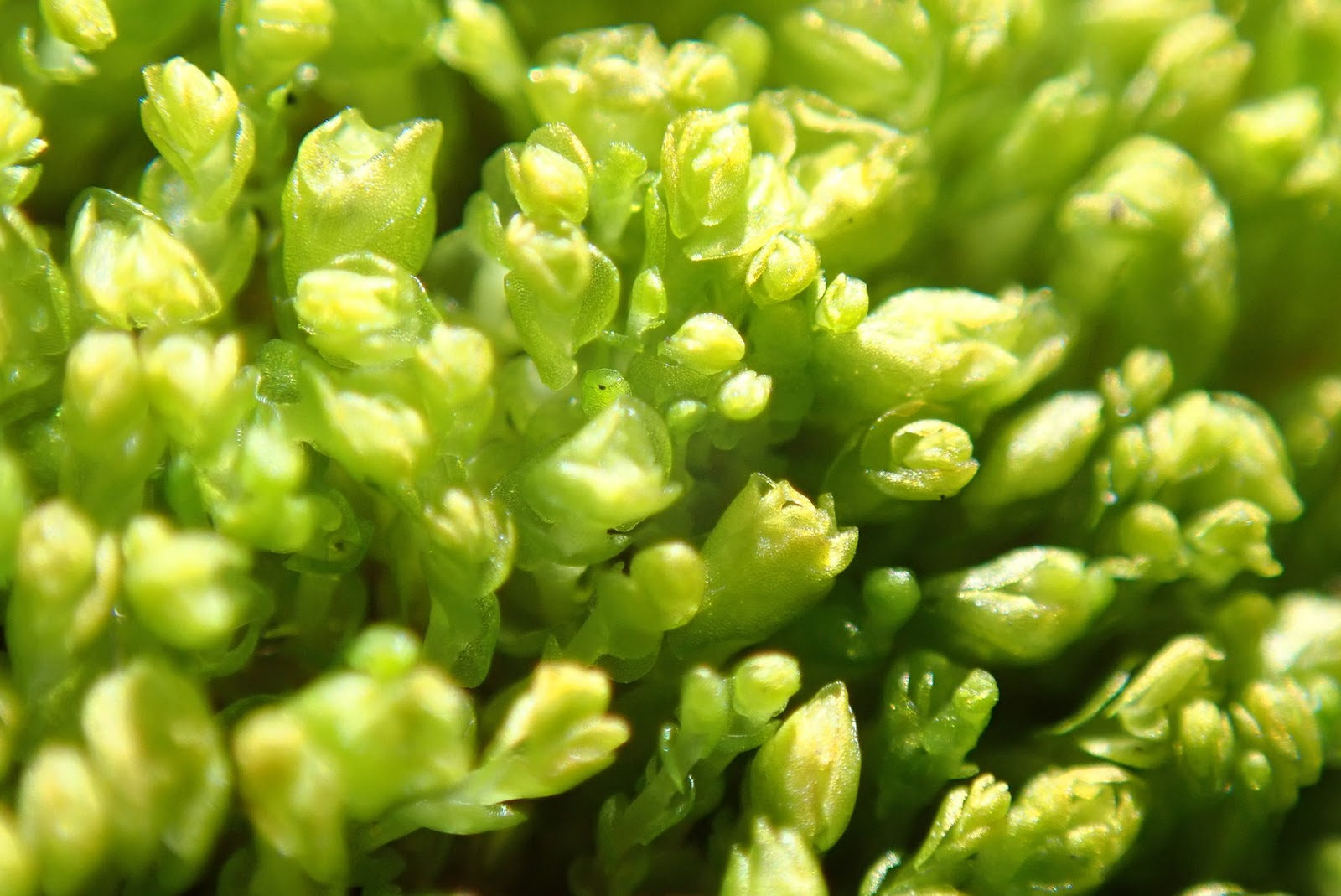
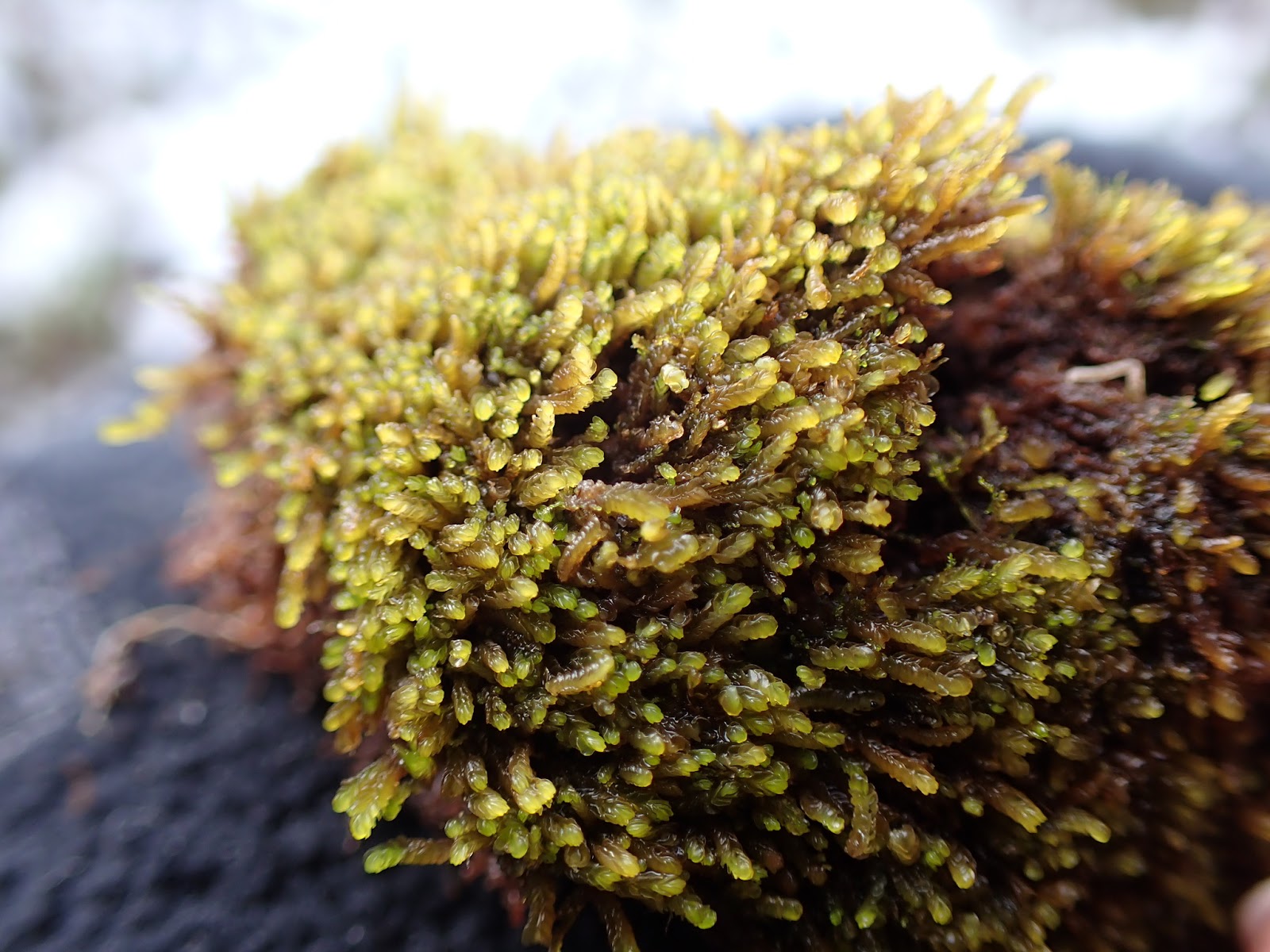
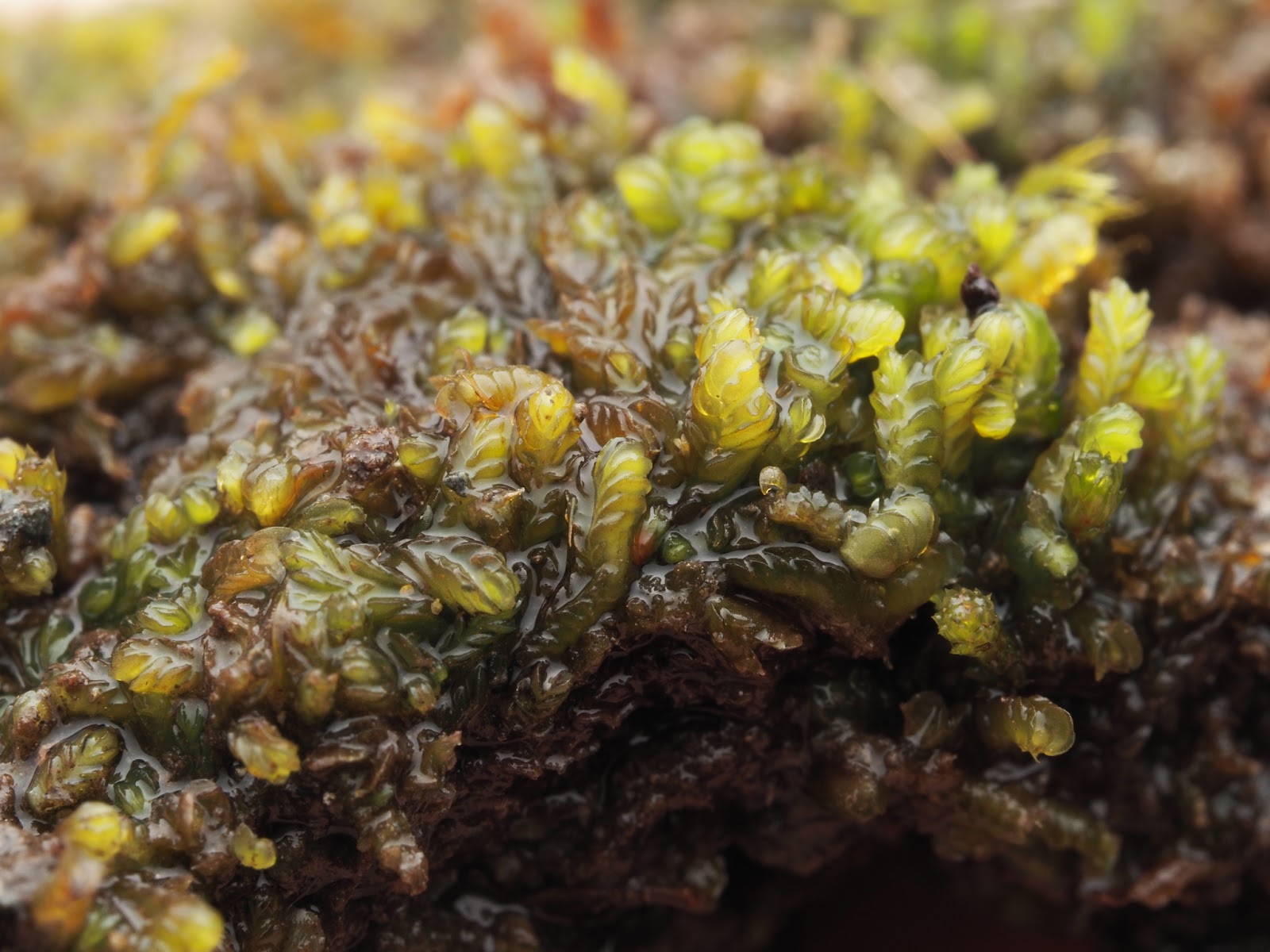
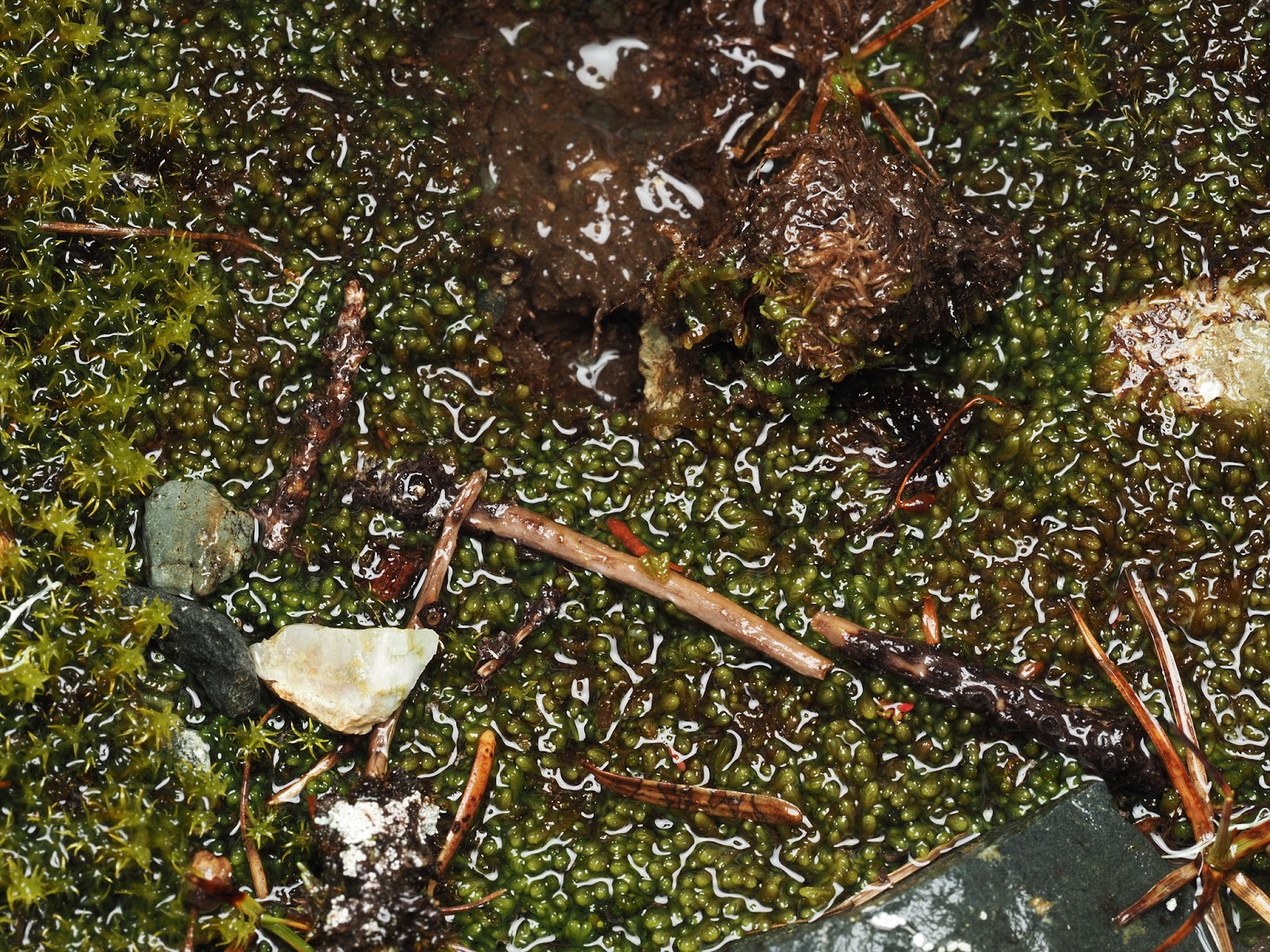
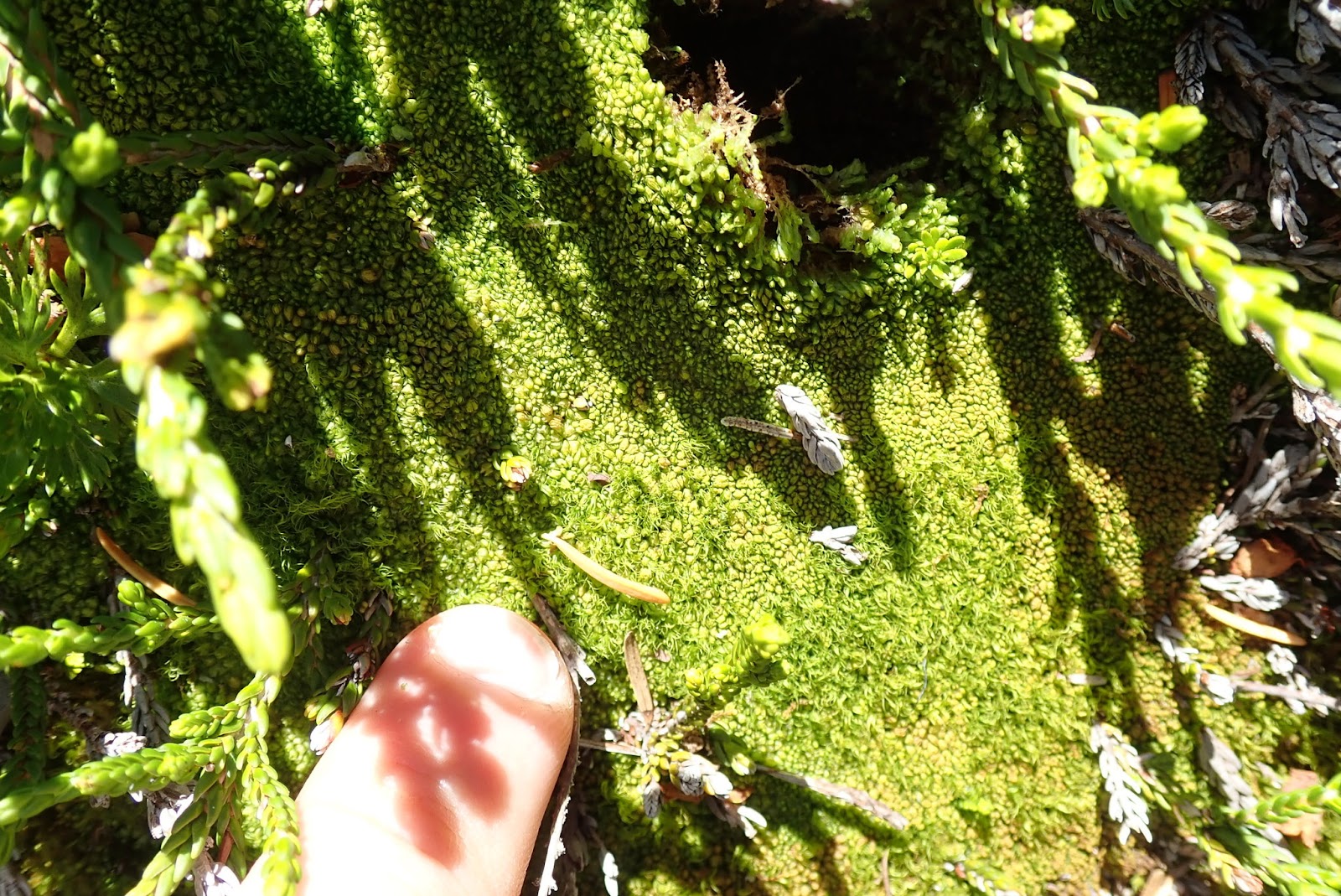
Found on thin soil amongst other bryophytes on timberline rock outcrops, Nardia geoscyphus forms mats of green to brown, suberect plants that are roughly 1 mm wide and up to 1 cm long. The shoots are composed of alternately-arranged elliptical leaves that are broader than long and unlobed (occasionally with two very shallow lobes). On the lower surface of the shoot, an unlobed underleaf should be visible, at least near the tips of the shoot (microscope may be neccessary here). This plant is “paroicous”, meaning that the antheridia are found below the archegonia on the same shoots.
Similar species
See table for comparison of regional species of Nardia
Habitat
Moist to dry humus, mineral soil, rock outcrops, cliffs, ledges, crevices, boulders, streambanks, and tundra in the upper montane, subalpine, and alpine zones
Associated species
XXXXXX
Distribution Map
Relevant Literature
- Godfrey, J.D. (1977). Hepaticae and Anthocerotae of southwestern British Columbia . [Doctoral dissertation, University of British Columbia]. UBC cIRcle.
- Hong, W. S. (2007). Scapania. In Flora of North America Editorial Committee (Eds.), Flora of North America North of Mexico (Vol. 3) . Oxford University Press.
- Wagner, D. H. (2013). Guide to the liverworts of Oregon: Scapania undulata . Oregon State University Herbarium.